









Caldwell in a Carbon Suit

Are you looking for a high-quality bipod for your rifle — ideally one lighter and more versatile than the classic Harris? The Accumax series from Caldwell may be just what you need.
Intro photo: Bipod Accumax Caldwell
Caldwell is one of the leading manufacturers of shooting accessories — no need to introduce it to our readers. The brand offers excellent products, such as a complete line of shooting rests and benches, or the Velociradar, which measures projectile velocity and ballistic coefficient. But not all of their products are hits: a few years ago, we tested the AR Bipods line for rifle mounting, and the results were underwhelming. Could the Accumax series redeem the brand?
Lightweight Carbon
The model I tested features height adjustment from 15 to 23 cm — smooth and continuous, unlike the segmented settings of competitors like Harris (which we will inevitably compare to, being the "gold standard") and its many clones. Those have the advantage of speed. Harris legs extend via spring-assist, while the Accumax has no assist and uses a screw lock mechanism. You twist the lock, extend the leg, and twist it back. With practice, it's manageable in seconds — though not as fast as a Harris. Still, for hunting, the silent operation is a big plus.
The locks are solid and there’s no risk of collapsing under the weight of the firearm and recoil. The legs fold both forward and backward, locking firmly via buttons with no wobble. Initially, the hinges were stiff, but after minimal use the friction surfaces settled in, and now they hold firmly with smooth-enough movement. I would personally prefer slightly more fluid action — this is an area where Caldwell could improve, although it doesn't affect functionality once you’re used to it.
Most components are made of a strong aluminum alloy. The ball joint is made of stainless steel for wear resistance. The legs are carbon fiber tubes with polymer feet and grip surfaces that offer rubber-like texture and anti-slip properties. Even with wet hands or gloves, handling is not an issue. Overall, I consider the build robust enough for any hunting scenario — I wouldn’t worry about breaking it even in rugged terrain. Thanks to the use of carbon, the weight is impressively low — just 250 g. For comparison, a similarly sized Harris with swivel joint weighs 370 g.
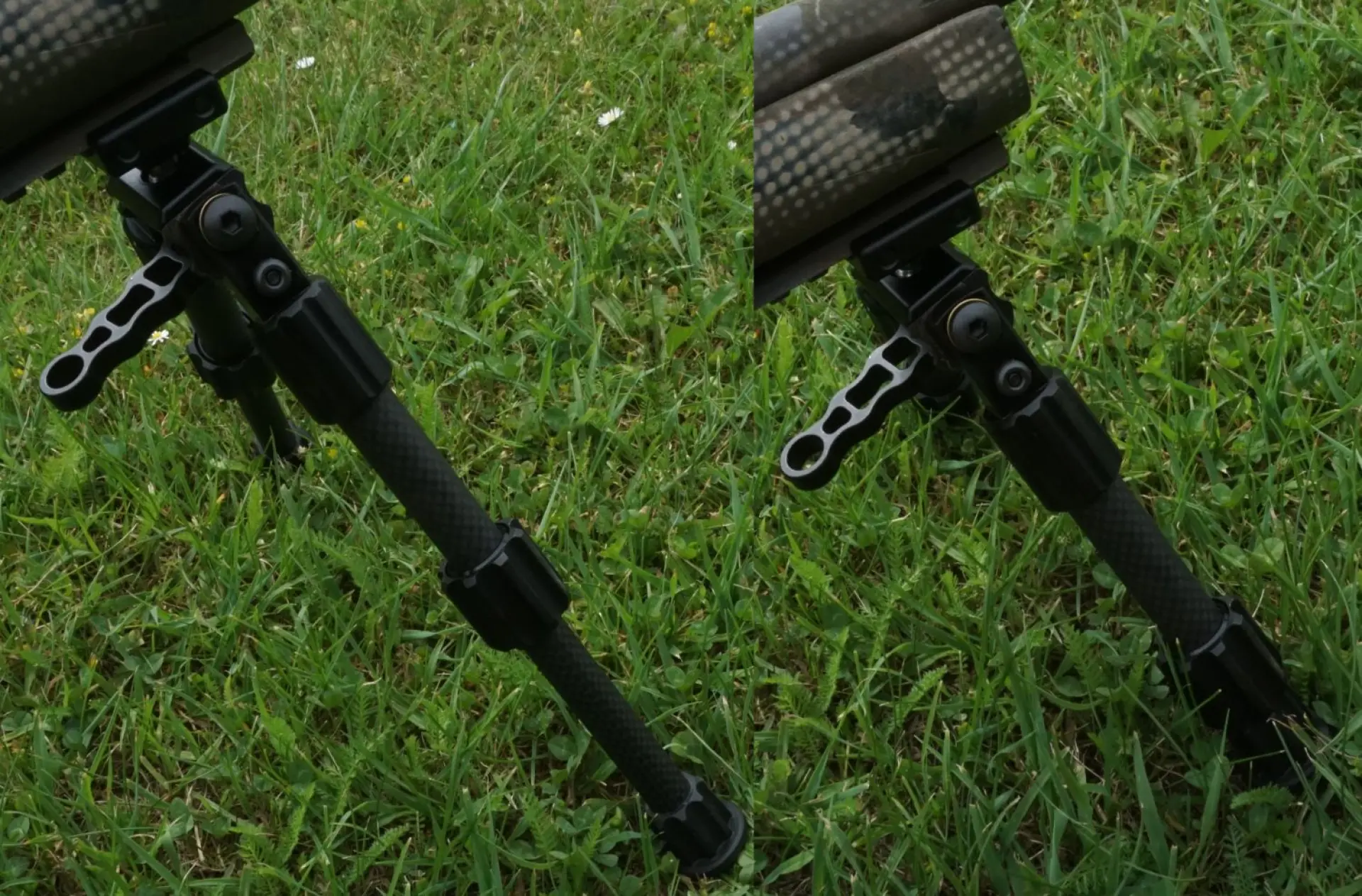 Legs allow continuous length adjustment and are locked in place with twist collars.
„Between the base and the mounting interface is a joint that allows full 360° leg rotation, tilt forward, backward, sideways — and anywhere in between! „


Variants
The Accumax line includes nine combinations based on mounting interface and leg-length range. You can choose from Picatinny, M-LOK/KeyMod, or sling swivel stud mounts. The length ranges are 15–23 cm, 22–33 cm, and 33–76 cm. The latter even supports sitting or kneeling shooting positions. That version includes two locking collars, giving three segments per leg, while the shorter ones have one collar and two segments. The core construction is otherwise identical across all models.
Worth noting — besides the Accumax line, Caldwell also offers the XLA series, budget copies of Harris bipods. They are slightly less robust and don’t quite match Harris in quality, but at roughly a third of the price (approx. CZK 1,463–2,360 depending on model), they provide the same functions and are reliable if not abused or used with heavy magnum calibers. In contrast, I recommend avoiding the Caldwell AR bipods, which are too flimsy. XLA remains the better option at a similar price point.

The longest model (33–76 cm) supports kneeling or seated shooting.
Advantages / Disadvantages
+ extremely adaptable to terrain
+ low weight
+ easy-to-adjust joint tension
- setup is slightly slower than Harris
- leg deployment could be smoother
Conclusion
I tested the Accumax on a lightweight rifle chambered in 6.5 Creedmoor — a bit more “kicky” — with roughly 200 rounds fired, from all kinds of positions, including in dynamic timed competitions, where the bipod gets knocked around a lot. Still, it held up — aside from some cosmetic scratches — no damage, no wear.
All in all, it’s an excellent bipod. Its ability to adapt to terrain is nearly unmatched. Tension adjustment is easy and effective, weight is low, and the construction is solid and durable — enough to survive heavy use and high-recoil calibers. Bonus points for the look, too: while some Caldwell products feel cheaper than their price tags suggest, the Accumax looks premium. My tested model costs CZK 3,922, the medium one CZK 4,315, and the longest goes for CZK 6,275. That’s pricier than Caldwell’s lower-end bipods, but when compared to the competition, the pricing is fair. A Harris with swivel joint and Picatinny mount (15–23 cm) costs CZK 4,190. Premium Atlas bipods start at CZK 8,000. The Harris may win slightly in deployment speed and rigidity, but it’s heavier and less adaptable. The Atlas V8 is smoother and even more rigid, but twice as heavy, twice as expensive, and offers less joint movement. Ultimately, choosing the right bipod comes down to personal preference and budget. But with the Accumax, you really can’t go wrong.
Accumax bipods, like all other products from Caldwell, are available from STROBL.CZ s.r.o.. More information can be found at strobl.cz, or directly at caldwellshooting.com .
Photo credits: Author’s archive, manufacturer materials - caldwellshooting.com
Author: Tomáš Prachař
Article originally published in Lovec magazine by Extra Publishing
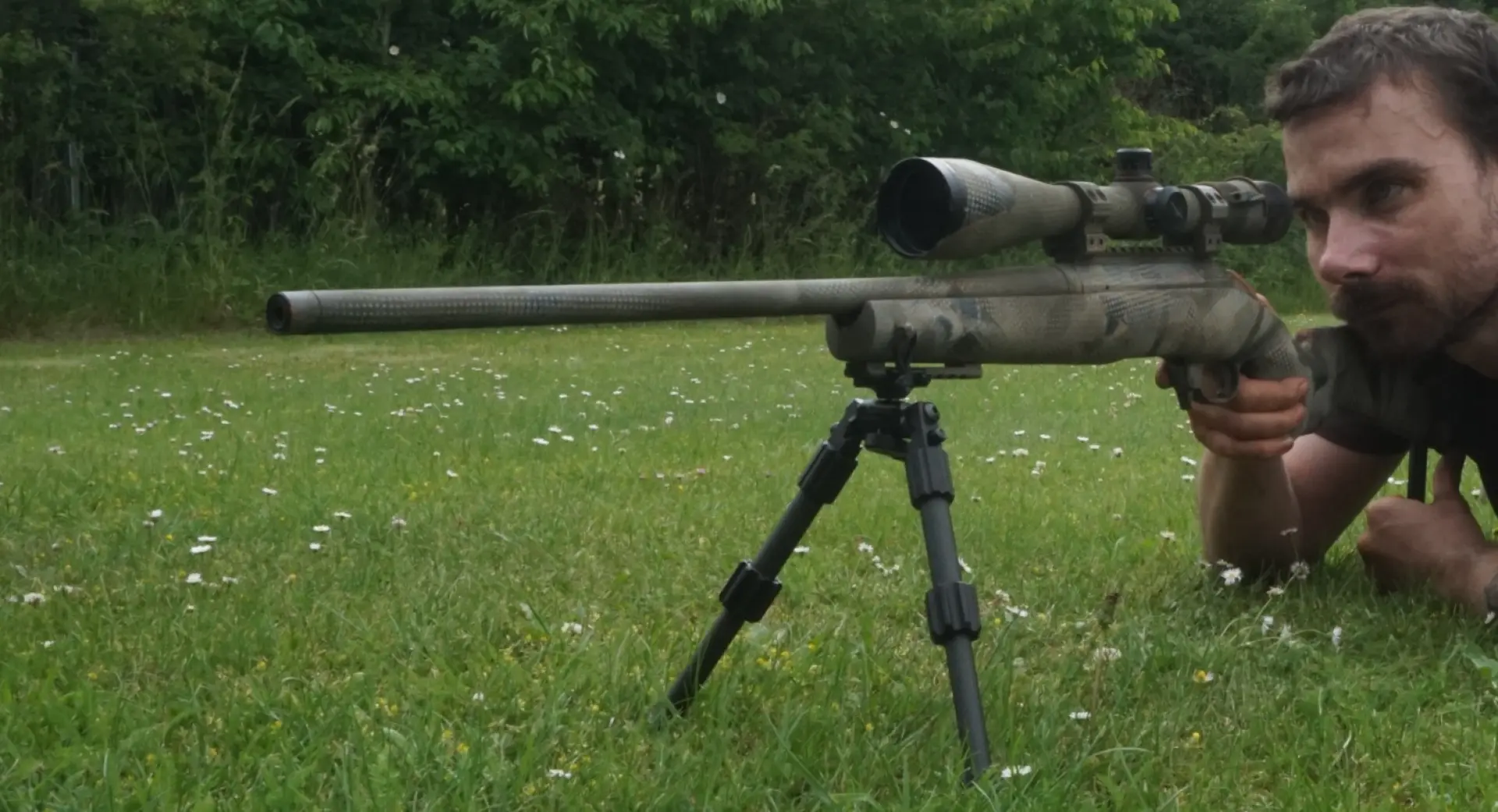 Accumax bipod in action.
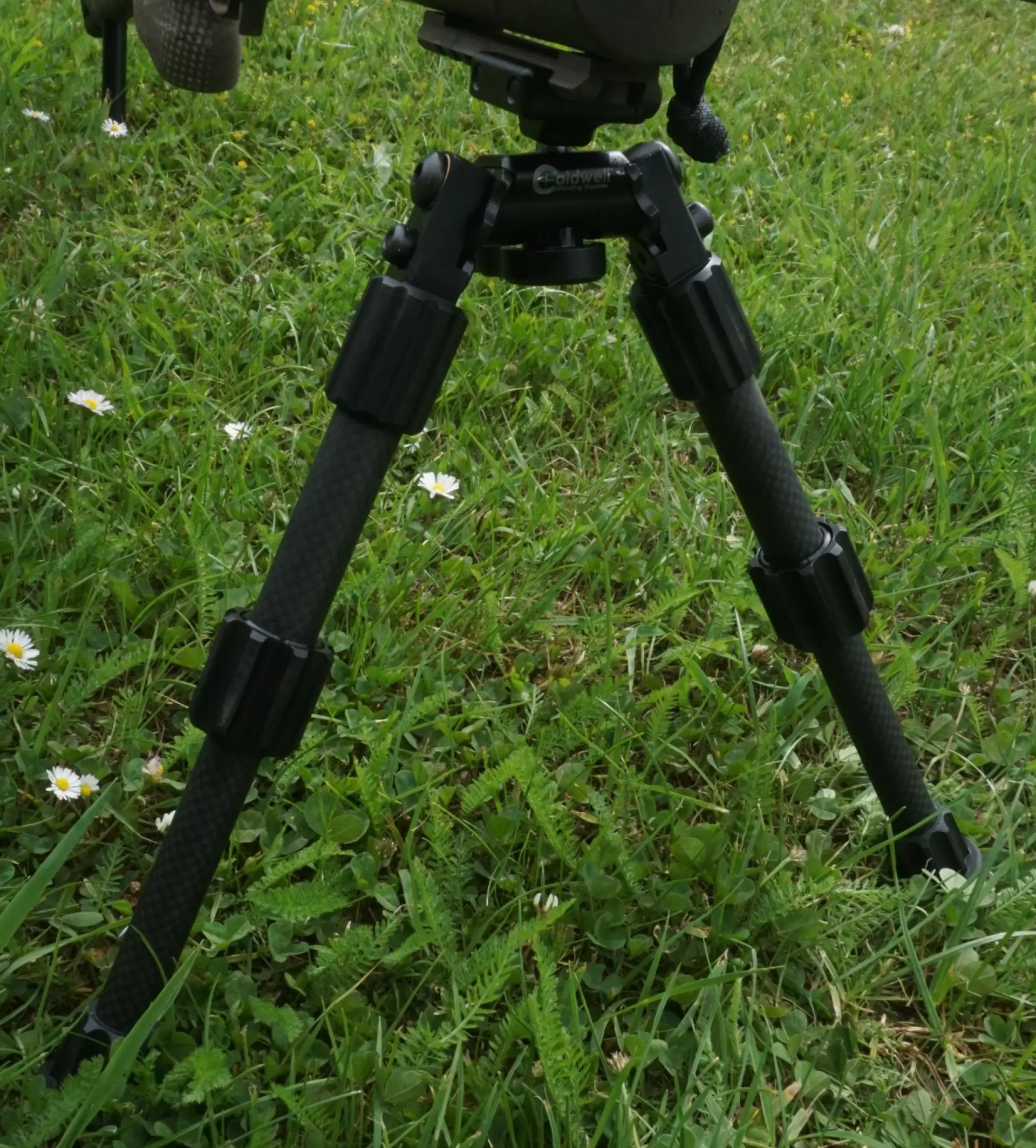 Thanks to carbon construction, weight is exceptionally low with no loss of durability.