









Wheeler Scope Mounts Revisited
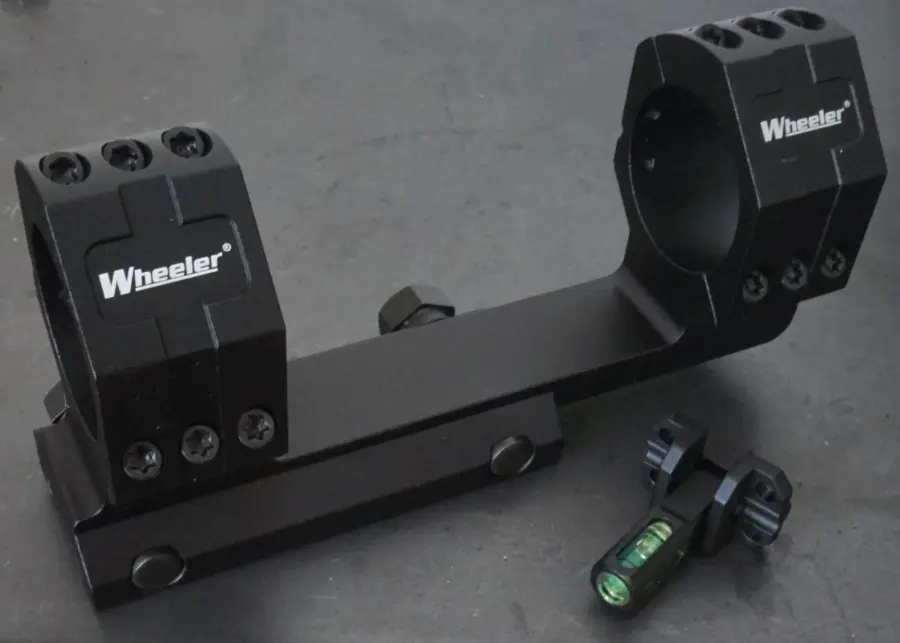

Among part of the hunting community, there is still a persistent misconception that mounts made from aluminum alloy cannot match steel in terms of strength. Wheeler rings are one of many proofs that this is not the case.
Introductory photo: Wheeler mount „1 Piece Cantilever Scope Mount“
In one of last year’s issues, we brought you a review of Wheeler Sporter scope rings, which scored highly thanks to their excellent price-to-performance ratio. Despite the fact that, in our test, they withstood even powerful calibers over the long term without any shift in zero, it was clear that a number of shooters would demand something more robust. Wheeler therefore introduced another line of rings that fully meets this requirement, while also offering something extra and allowing interested users to choose from a wider range of variants.
Family of mounts
Unfortunately, Wheeler’s marketing department somewhat missed an opportunity and, instead of distinctive naming or at least a clear series designation, used only basic descriptive names for the mounts. This is a pity, as these products are certainly not low-grade Chinese production undeserving of proper naming. In any case, the rings in this series can be divided into three basic lines, differing in form. The “1 Piece Bolt Action Scope Mount” consists of rings joined into a single unit by a “bridge” and mounts directly to the rifle action. Sub-variants are available that are compatible with the mounting hole standards of Remington 700 rifles, both short and long actions, as well as Savage 10 and Savage 110. It should be emphasized that this does not mean the rings can only be used on these four bolt-action rifles. Their mounting standard has been adopted by a number of other manufacturers and used on their firearms. Next is the “1 Piece Cantilever Scope Mount.” This is again a one-piece mount, but equipped with a universal Picatinny mounting interface. The lineup is completed by the “2 Piece Picatinny Scope Rings,” again Picatinny-based, but consisting of two separate rings. In all three cases, you can choose from three scope tube diameters: 1" (25.54 mm), 30 mm, and 34 mm, covering all common sizes. Another variable is mounting height. The low version has approximately 7 mm of material between the base and the scope tube, medium 10 mm, and high 15 mm. In the “Bolt Action” line, the low version is not available; instead, an extra-high version with 21 mm is offered. For the “2 Piece Picatinny” rings, 21 mm is the only available height, and this is precisely the type of mount I had the opportunity to test thoroughly. Setting aside the form factor, the construction, design, materials, and functionality are identical across all versions, and our review can therefore be applied to each of them.
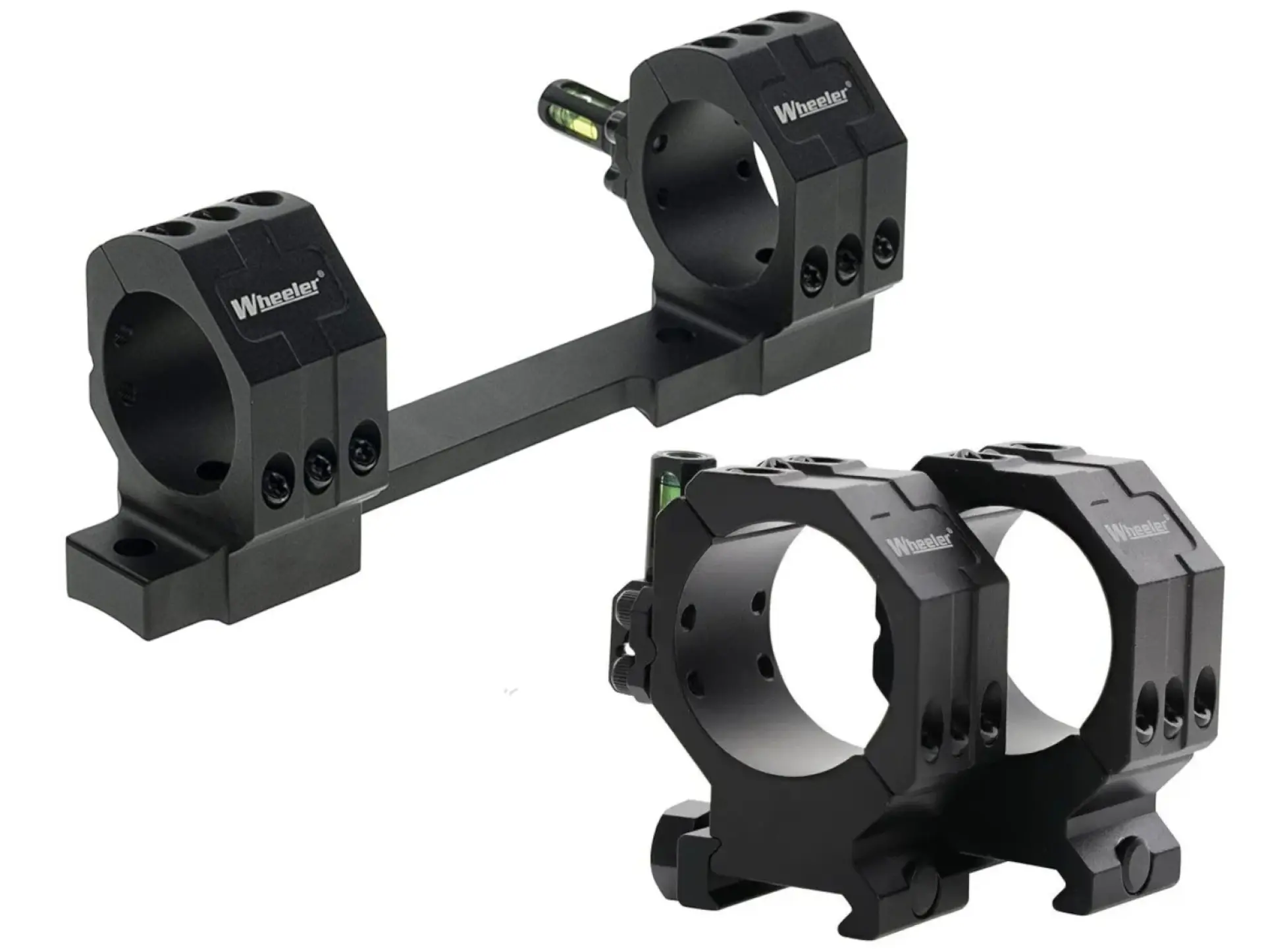
Variant „1 Piece Bolt Action Scope Mount“ and separate rings.
„The main asset of this mount is its robustness. Each ring clamps the scope tube over an above-average contact area, using six screws! “
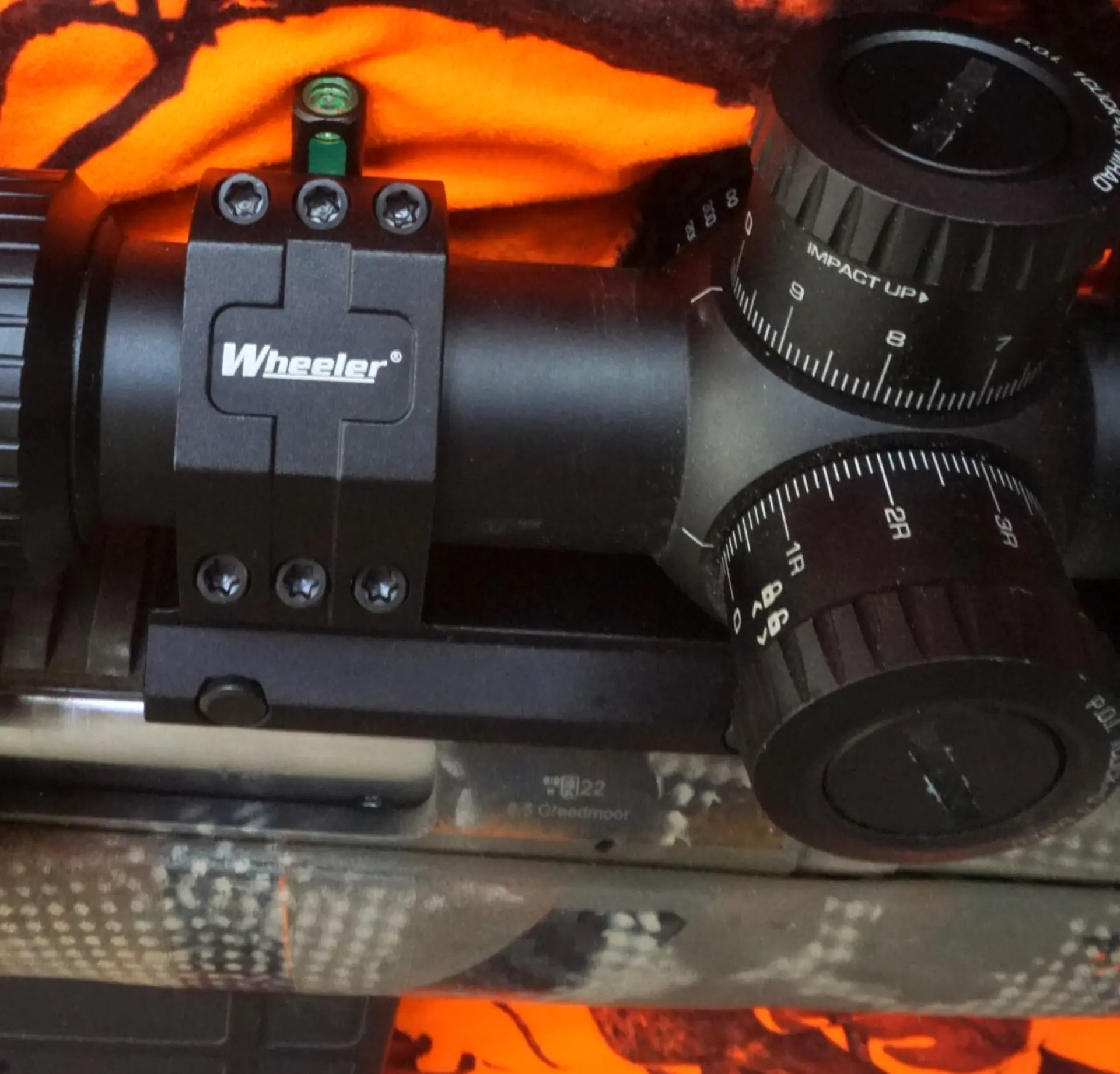 Each ring clamps the scope tube over an above‑average contact area with six screws.
Robust Construction
The material is solid 6061 aluminum alloy, coated with a matte black protective finish that’s only interrupted by the manufacturer’s markings. The rings feature an asymmetric design with an approximately 45° angle. The advantage of this solution is that no screw heads protrude laterally as they would on a typical parallel design, where something can easily snag on them. Likewise, all edges are safely chamfered. The manufacturer specifies a recommended torque of 15–18 in/lbs for the screws on the rings, though personally I would recommend 20 in/lbs. The base nuts require around 45 in/lbs. If you’re comfortable “by feel,” the kit includes a simple Torx driver. The screws themselves are quite good quality — I deliberately pushed one to 60 in/lbs and it did not strip either in the thread or in the head.
The main strength of this mount is its robustness. Each ring clamps the scope tube over an above‑average contact area, using six screws (rather than the usual four). Combined with an overall massive construction and no obvious weak points, I have no concerns that the mount would fail to hold zero. I personally tested it on a lightweight rifle in .444 Marlin with energy over 4,000 J, and everything stayed exactly where it should. I also tested it on a 6.5 Creedmoor bolt gun, where I had the chance to assess any potential impact on accuracy compared to Vortex Seekins Precision rings — which cost more than twice as much — and the group sizes were practically identical. After that, the mount found a more permanent home on a semi‑automatic AR‑15 SPR in .223 Remington, which doesn’t generate a lot of recoil, but the design still has to withstand rough handling in dynamic training and military‑style competition scenarios. Based on overall performance so far, I would conservatively estimate it’s good for at least 600 rounds with nothing to complain about.
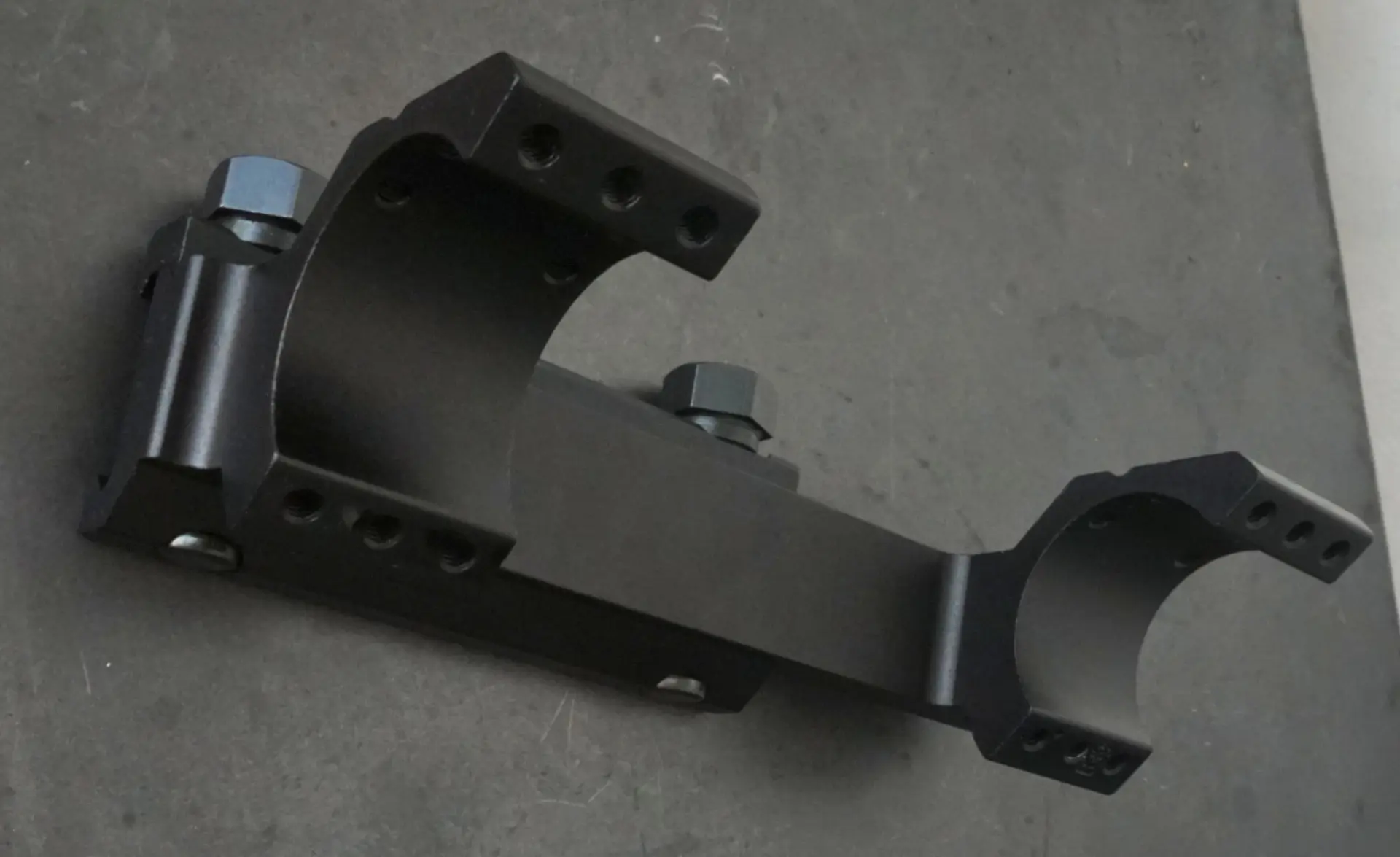 The rings have an asymmetric design with about 45° deflection, so no lateral screw heads protrude like on a typical parallel‑style ring, avoiding snags.
Excellent Alignment
The flip side of a generously engineered construction is higher weight — in the version I tested, about 218 g. You won’t find any relief cuts here, so this isn’t ideal if you’re building a rifle with minimal weight in mind.
It’s also worth noting that my particular configuration has what is called an “offset,” meaning the rings are slightly forward relative to the base. This is especially useful on AR‑type platforms, but can also help on traditional hunting rifles when you need to accommodate long‑eyepiece scopes, short mounting bases, or simply prefer more eye relief.
One of the key parameters indicating the quality of any scope rings is concentricity — the closer to perfect it is, the less stress is placed on the scope tube and the more evenly it is held in place, which does favour the strength of the clamping interface. I had access to a lapping set, allowing me to check the factory level of concentricity, and I can only compliment the manufacturer. The dummy lapping rods did not show any deviation visible to the eye. The marks left after lapping also showed excellent uniformity. This is partly thanks to the one‑piece construction, although even one‑piece rings aren’t immune to slight imperfections, whereas two‑piece rings can be more prone to them. In any case, I’ve seen significantly more expensive mounts with larger alignment errors.
Considering the overall quality, Wheeler mounts are available at a very good price point. The variant I tested retails around 1,928 CZK, and the split‑ring configuration is about 1,652 CZK. Apart from the slightly higher weight, I personally have nothing to fault them for. Some users might miss a relief cut or prefer a different base‑clamping system, but those are more personal preferences than actual criticisms. All things considered, this is an excellent mount for the money.
Pros / Cons
+ Excellent value for money
+ Robust construction
+ Integrated bubble level
- Slightly higher weight
- Some users may miss relief cuts
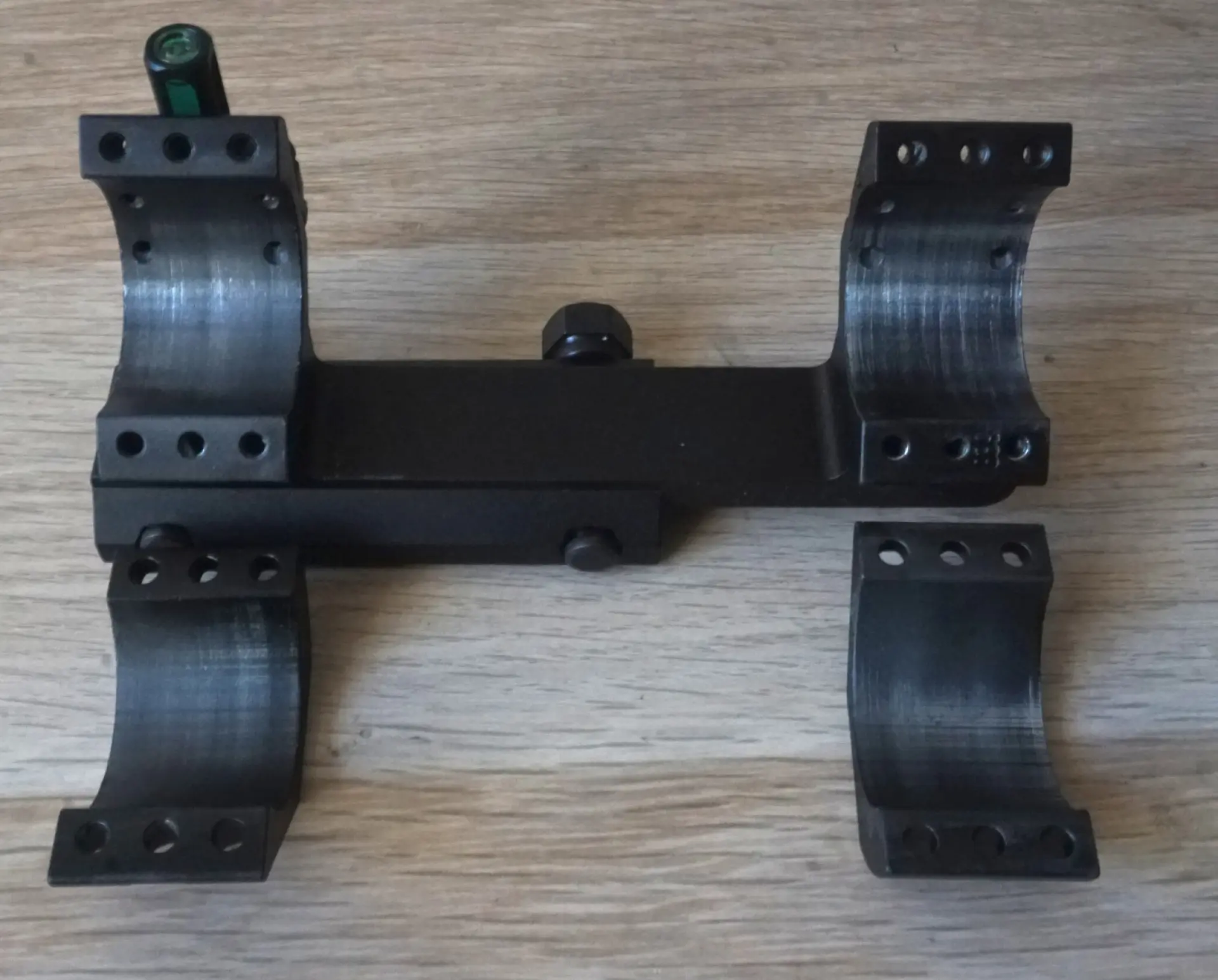 Mount after lapping. Notice the uniform marks, which demonstrate excellent concentricity straight from the factory.
 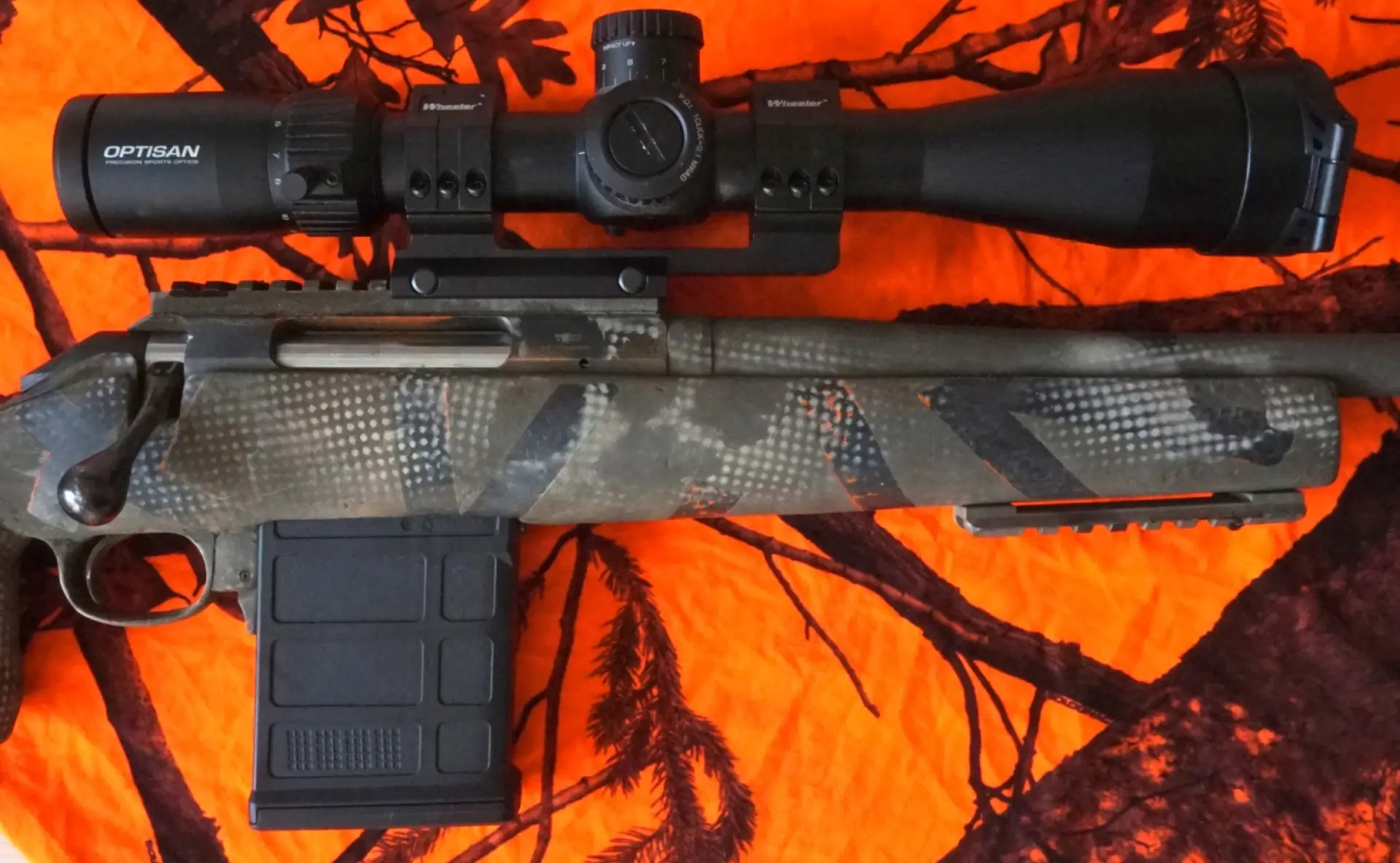 The tested variant is characterized by the “forward offset” of the scope relative to the rifle’s base.
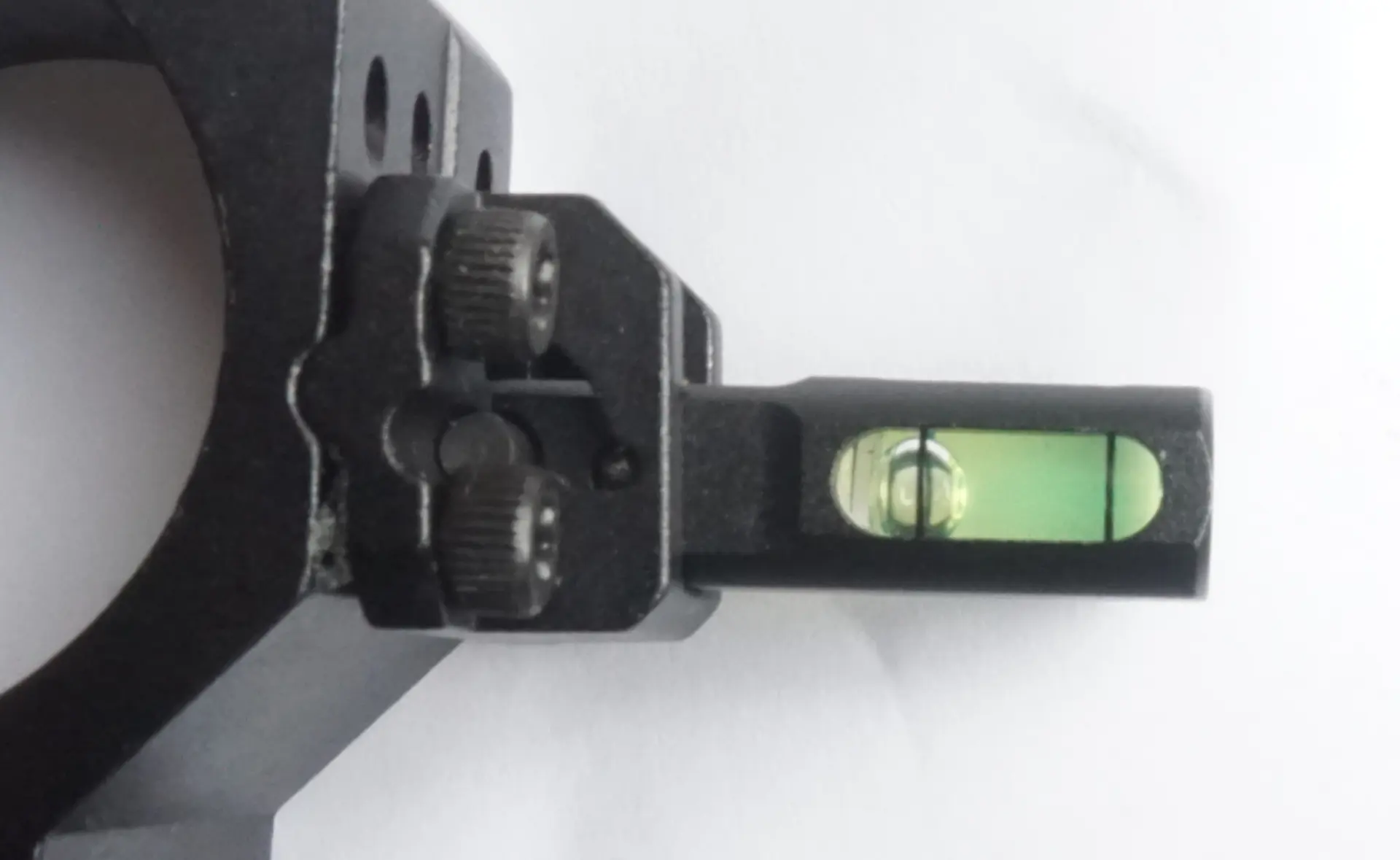 Detail of the add-on bubble level module.
Bonus feature
If you shoot at longer distances, you’ll appreciate the premium feature of an integrated bubble level. As range increases — and especially the higher your scope’s optical axis is above the bore axis — the more any cant or tilt can translate into point-of-impact shifts. This is particularly relevant on uneven terrain, where it’s easy to overlook rifle cant, but a bubble level won’t lie. This is a small add-on module mounted to the side of the ring, with a folding level built in. When not in use, it stays folded down and doesn’t protrude. It’s a minimalist yet fully functional solution. And if you don’t plan to use the level, you can simply detach the module from the mount.
To make it work properly, you’ll need to level the bubble. It’s not complicated — just place another level on a flat surface like the base or the scope (if already leveled), and adjust the mounted one so that both show the same reading. The integrated level is adjustable within its mount — simply loosen the screws on one side and tighten on the other until the bubble aligns with the reference level.
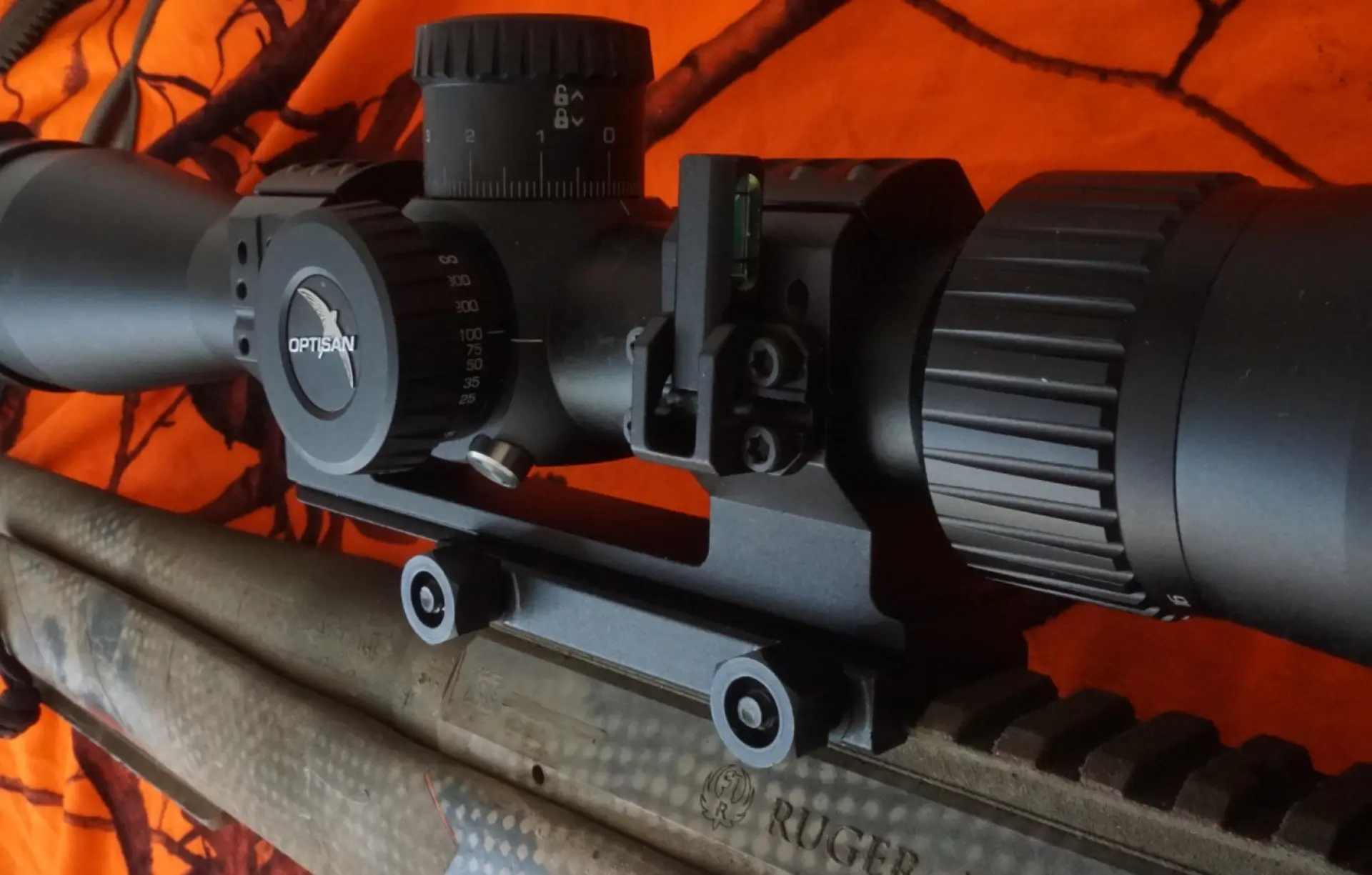 If you’re not using the level, you can simply fold it down.
Photo sources: Author’s archive, manufacturer materials - wheelertools.com
Author: Tomáš Ježek
Originally published in Lovec magazine by Extra Publishing